
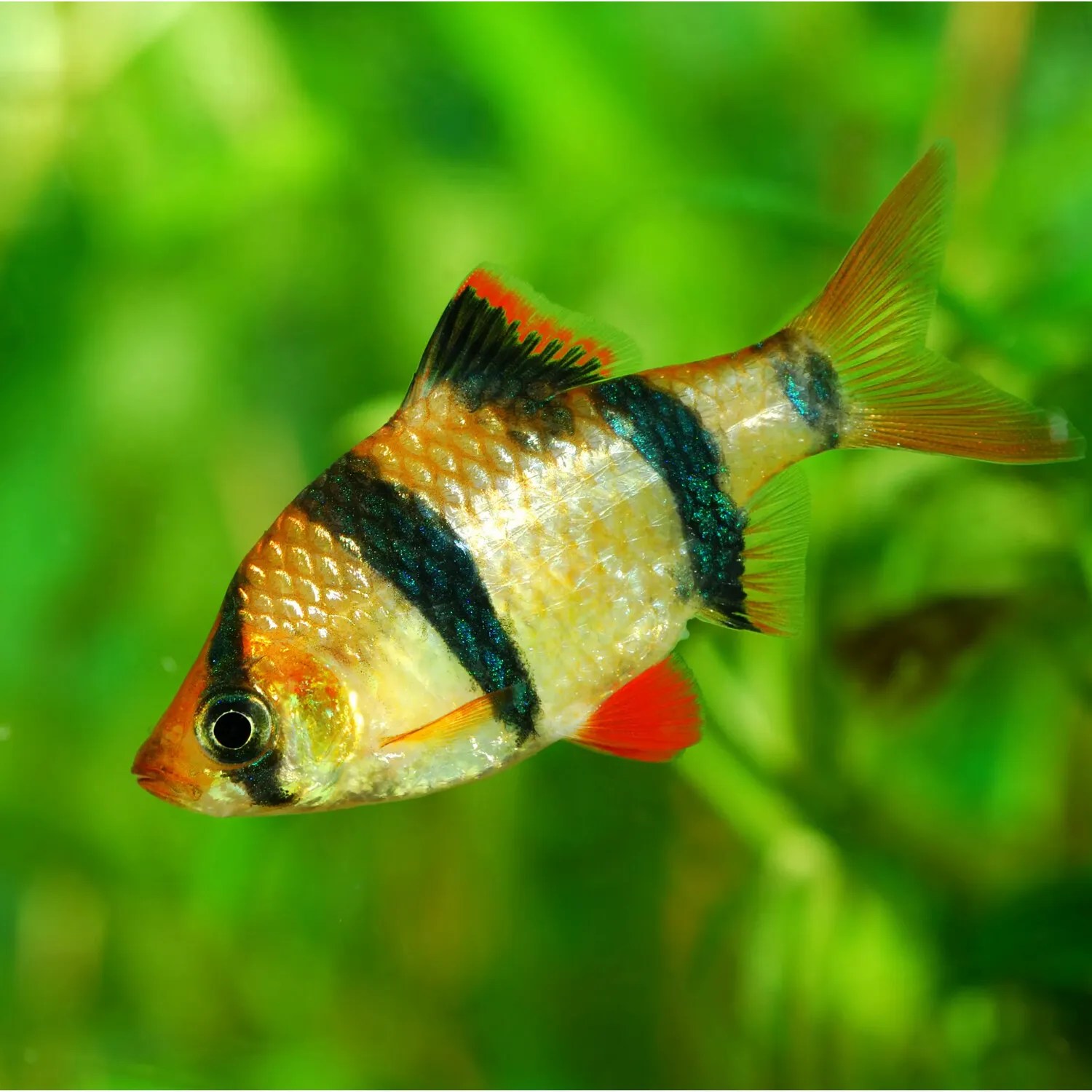
Tiger Barbs, scientifically known as Puntigrus tetrazona, are popular and captivating aquarium fish that have captured the hearts of many aquarists around the world. These striking little fish, known for their vivid colors and energetic personalities, are a common choice for both beginner and experienced hobbyists. In this comprehensive guide, we’ll delve into all aspects of Tiger Barbs, from their physical characteristics to their care requirements, and even breeding and compatibility with other fish. Physical Characteristics: Tiger Barbs are named after their appearance, as their bodies are adorned with vertical black stripes that closely resemble the pattern of a tiger’s stripes. These stripes run along their silvery to golden bodies and give them a unique and striking appearance. The intensity of the stripes can vary among individuals, and they may change in response to the fish’s mood or environmental conditions. Adult Tiger Barbs usually grow to be around 2 to 3 inches (5 to 7.5 centimeters) in length, making them a compact addition to freshwater aquariums. Their small size and vibrant colors make them visually appealing and suitable for a wide range of tank setups. Behavior: One of the key attributes that make Tiger Barbs stand out is their active and playful behavior. These fish are known for their vivacious swimming patterns and can often be seen darting around the aquarium, creating a lively and dynamic atmosphere. They are always on the move and will explore every nook and cranny of the tank. However, it’s important to note that Tiger Barbs can be a bit feisty, especially when kept in smaller groups. They have a tendency to engage in fin-nipping behavior, which can be directed at other fish in the aquarium. To minimize this behavior and keep Tiger Barbs happy, it’s recommended to keep them in groups of at least five individuals. In larger groups, their aggression is more evenly dispersed, reducing stress and damage to individual fish. Care Requirements: Tiger Barbs are considered hardy and adaptable fish, which makes them an excellent choice for aquarists of all experience levels. Nevertheless, there are certain care requirements that need to be met to ensure their well-being. Tank Setup: A well-maintained, moderately sized aquarium is ideal for Tiger Barbs. They appreciate plenty of hiding places, such as plants, rocks, and driftwood, while also needing open swimming spaces. A tank of around 20 gallons (75 liters) or larger is suitable for a small group of Tiger Barbs. Water Parameters: Tiger Barbs thrive in water with a slightly acidic to neutral pH level, typically between 6.5 and 7.5. The water temperature should be maintained in the range of 75-82°F (24-28°C). Filtration and Water Quality: Providing proper filtration and regular water changes is essential to maintain good water quality. Clean, well-oxygenated water is crucial for the health of Tiger Barbs. Diet: Tiger Barbs are omnivores, and they will readily accept a varied diet. High-quality flakes, pellets, live foods, and frozen foods can all be part of their diet. Offering a diverse range of food helps keep them healthy and enhances their vibrant colors. Lighting: While not particularly sensitive to lighting, Tiger Barbs will benefit from a well-lit tank with a natural day-night cycle. Tank Mates: Choosing appropriate tank mates for Tiger Barbs requires careful consideration. Their sometimes aggressive and fin-nipping behavior can be disruptive to certain species, especially those with long fins. To ensure a harmonious community tank, consider housing Tiger Barbs with similarly sized and active fish. Some potential tank mates include other barbs, danios, tetras, and rasboras. In addition to choosing compatible tank mates, it’s essential to maintain the recommended group size of at least five Tiger Barbs. When kept in smaller groups, their aggression tends to be more pronounced. In a larger group, the aggression is distributed among the individuals, reducing stress and the potential for injury. Breeding: Breeding Tiger Barbs in captivity is possible, although it can be a bit challenging compared to some other fish species. They are egg layers and scatter their eggs across the substrate. To increase the chances of successful breeding, you can set up a separate breeding tank with fine substrate, such as marbles, to protect the eggs from being eaten by the adults. Once the eggs are laid, it’s common for Tiger Barbs to consume their own eggs or even the fry. To prevent this, promptly transfer the adults to the main tank after spawning, leaving the eggs in the breeding tank. In about 24 to 48 hours, the eggs will hatch into tiny fry. Feeding the fry with appropriate-sized food, such as infusoria or finely crushed flake food, is necessary to ensure their survival and growth. Health and Disease: Tiger Barbs are generally hardy and resilient, but like all fish, they can be susceptible to various diseases if their tank conditions are suboptimal. Common health issues in Tiger Barbs include ich (white spot disease), fin rot, and velvet disease. Regular observation and maintenance, as well as quarantining new additions to the tank, can help prevent and address these problems. Proper nutrition and stress reduction through adequate tank size and group size are also important in keeping Tiger Barbs healthy. In conclusion, Tiger Barbs are an eye-catching and lively addition to freshwater aquariums. Their striking appearance, active behavior, and suitability for various tank setups make them a favorite choice among aquarists. By meeting their specific care requirements, including tank size, water parameters, and group size, you can create an environment where Tiger Barbs can thrive and display their natural vibrancy. Whether you’re a beginner or an experienced fish keeper, Tiger Barbs can bring a sense of liveliness and charm to your aquarium, making them a fantastic choice for fish enthusiasts of all levels of expertise.
Brand
Cooler Master
Related products
-
Mom Tiara Crown Rhinestone Pin Brooch Women’s Crystal JewelryAdd to basket
Quick View
-
Designer Rhinestone Crown Brooch Pin For Women Girls Ladies 4G9Add to basket
Quick View
-
Pearl Ruby Rhinestone Tiara Religious Crown Pin Brooch, Beauty Pageant Princess Bridal Wedding Crown Pin MN4Read more
Quick View
-
Vintage Diamond Rhinestone Crown Pin Princess Tiara Beauty Pageant Brooch Women’s Jewelry, Crowns Brooches PinsAdd to basket
Quick View