
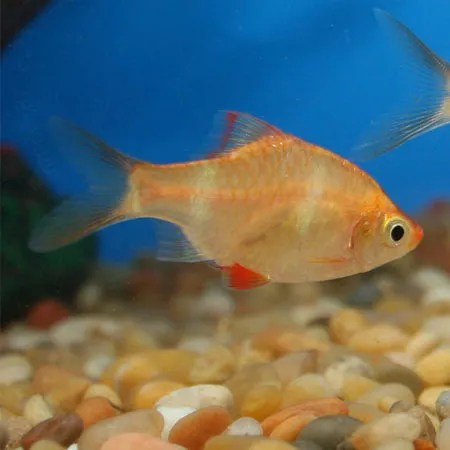
The Albino Tiger Barb is a variation of the popular Tiger Barb (Puntigrus tetrazona) known for its distinctive coloration. Albino Tiger Barbs are characterized by their lack of melanin, which gives them a pale or pinkish-white body color instead of the typical silver or gold body seen in regular Tiger Barbs. Despite their different coloration, Albino Tiger Barbs share many of the same care requirements and behaviors as their standard counterparts. Here’s a detailed guide on Albino Tiger Barbs: Physical Characteristics: The most noticeable feature of Albino Tiger Barbs is their pale or pinkish-white body color. They lack the typical dark stripes seen in regular Tiger Barbs, and their eyes often appear red or pink due to the absence of pigmentation. The absence of melanin is what gives them their “albino” appearance. Behavior and Care: The care requirements and behaviors of Albino Tiger Barbs are similar to those of regular Tiger Barbs: Tank Size: Albino Tiger Barbs thrive in a well-maintained, moderately sized aquarium. Provide ample hiding places with plants, rocks, and driftwood, while also ensuring there is enough open swimming space. A tank with a capacity of around 20 gallons (about 75 liters) or larger is suitable for a small group of Albino Tiger Barbs. Water Parameters: Maintain water conditions with a slightly acidic to neutral pH level, typically between 6.5 and 7.5. Keep the water temperature in the range of 75-82°F (24-28°C). Filtration and Water Quality: Proper filtration and regular water changes are essential to maintain good water quality. Clean, well-oxygenated water is crucial for the health of Albino Tiger Barbs. Diet: Albino Tiger Barbs are omnivores and will readily accept a varied diet. High-quality flakes, pellets, live foods, and frozen foods can all be part of their diet. A diverse range of food helps keep them healthy and can enhance their colors. Group Size: Albino Tiger Barbs, like their standard counterparts, should be kept in groups of at least five individuals to minimize aggression and stress. In larger groups, their aggression is more evenly dispersed, reducing the likelihood of fin-nipping. Tank Mates: When selecting tankmates for Albino Tiger Barbs, it’s important to choose species that can tolerate their active and sometimes feisty behavior. Albino Tiger Barbs should be housed with similarly sized and active fish to help disperse any aggression. Other small, peaceful community fish like tetras, rasboras, and danios are often suitable companions. Since Albino Tiger Barbs can be fin-nippers, avoid pairing them with long-finned fish that might become targets of their nipping behavior. When kept in larger groups, their aggression is generally reduced, and they can coexist more harmoniously with other tankmates. Breeding: Breeding Albino Tiger Barbs in captivity is possible but can be challenging, similar to regular Tiger Barbs. They are egg-layers that scatter their eggs, and a separate breeding tank with suitable spawning substrates, such as fine-leaved plants, is typically needed. After spawning, it’s important to remove the adults to protect the eggs and fry from being eaten. Health and Disease: Albino Tiger Barbs are generally hardy and resilient, but like other fish, they can be susceptible to common aquarium diseases. Regular observation and maintenance, as well as quarantining new additions to the tank, can help prevent and address these problems. Proper nutrition and stress reduction through adequate tank size and group size are also essential for keeping Albino Tiger Barbs healthy. In conclusion, Albino Tiger Barbs are a captivating variation of the popular Tiger Barb. Their unique coloration, active nature, and similar care requirements make them an attractive choice for aquarium enthusiasts. By providing them with an appropriate environment, compatible tankmates, and a well-balanced diet, you can enjoy the beauty and activity of Albino Tiger Barbs in your freshwater aquarium.
Brand
Cooler Master