
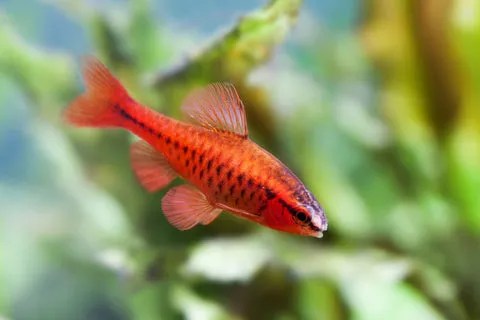
The Cherry Barb (Puntius titteya), also known as the Red Barb, is a small, peaceful, and colorful freshwater fish species that is popular among aquarists. Cherry Barbs are native to Sri Lanka and are well-regarded for their vibrant colors, ease of care, and suitability for community aquariums. In this guide, we’ll explore the key characteristics, care requirements, and tankmates for Cherry Barbs. Physical Characteristics: Cherry Barbs are known for their striking colors and small size. Some key physical characteristics include: Coloration: The Cherry Barb gets its name from its vibrant red coloring, which is most pronounced in males. Males typically have deeper and more intense red coloration, while females are slightly paler. Their fins are often adorned with contrasting black markings, particularly in the males. Size: Adult Cherry Barbs are relatively small, usually reaching a length of around 1.5 to 2 inches (3.8 to 5 centimeters). Behavior and Care: Cherry Barbs are generally peaceful and social fish, making them suitable for community aquariums. Here are some important considerations for their care: Tank Size: A small group of Cherry Barbs can be comfortably accommodated in a tank with a minimum capacity of 15 gallons (about 57 liters). A larger tank is recommended for a larger group of Cherry Barbs or when keeping them with other fish species. Water Parameters: Cherry Barbs thrive in slightly acidic to neutral water conditions with a pH range of 6.5 to 7.5. The water temperature should be maintained within the range of 73-81°F (22-27°C). Filtration and Water Quality: Proper filtration and regular water changes are essential for maintaining good water quality. Clean, well-oxygenated water is crucial for the health of Cherry Barbs. Diet: Cherry Barbs are omnivores and will readily accept a varied diet. They can be fed high-quality flakes, pellets, live foods, and frozen foods like brine shrimp and daphnia. Providing a diverse range of food helps keep them healthy and enhances their colors. Group Size: Cherry Barbs are schooling fish and should be kept in groups of at least five or more to ensure their well-being and bring out their natural behavior. Tank Setup: Provide ample hiding places with plants, rocks, and driftwood. Cherry Barbs appreciate a well-decorated tank with vegetation and open swimming areas. The inclusion of live plants can also be beneficial, as it provides them with additional cover and a natural habitat. Tank Mates: Cherry Barbs are generally peaceful and can coexist with a variety of community fish. When selecting tankmates, consider other small and peaceful species. Suitable companions may include tetras, rasboras, danios, gouramis, and smaller catfish. Avoid pairing Cherry Barbs with large or aggressive species that might intimidate or harm them. Also, refrain from keeping them with fin-nipping fish, as Cherry Barbs have delicate fins that can be vulnerable. Breeding: Breeding Cherry Barbs in captivity is relatively straightforward. They are egg-layers that scatter their eggs among plants. To encourage spawning, provide Cherry Barbs with a well-planted tank with fine-leaved plants or spawning mops. Once the eggs are laid, the adults should be removed to prevent them from eating the eggs. The fry will hatch in a few days and can be fed with infusoria or liquid fry food until they are large enough to accept finely crushed flake food. Health and Disease: Cherry Barbs are generally hardy, but they can be susceptible to common aquarium diseases. Regular observation and maintenance, as well as quarantining new additions to the tank, can help prevent and address these problems. Maintaining stable water conditions and providing a balanced diet are also essential for keeping Cherry Barbs healthy. In summary, Cherry Barbs are a charming and colorful addition to freshwater community aquariums. Their vibrant red coloration, peaceful nature, and ease of care make them a favorite choice among aquarists. By creating a suitable environment, providing compatible tankmates, and ensuring proper maintenance, you can enjoy the beauty and activity of Cherry Barbs in your aquarium.
Brand
Cooler Master