
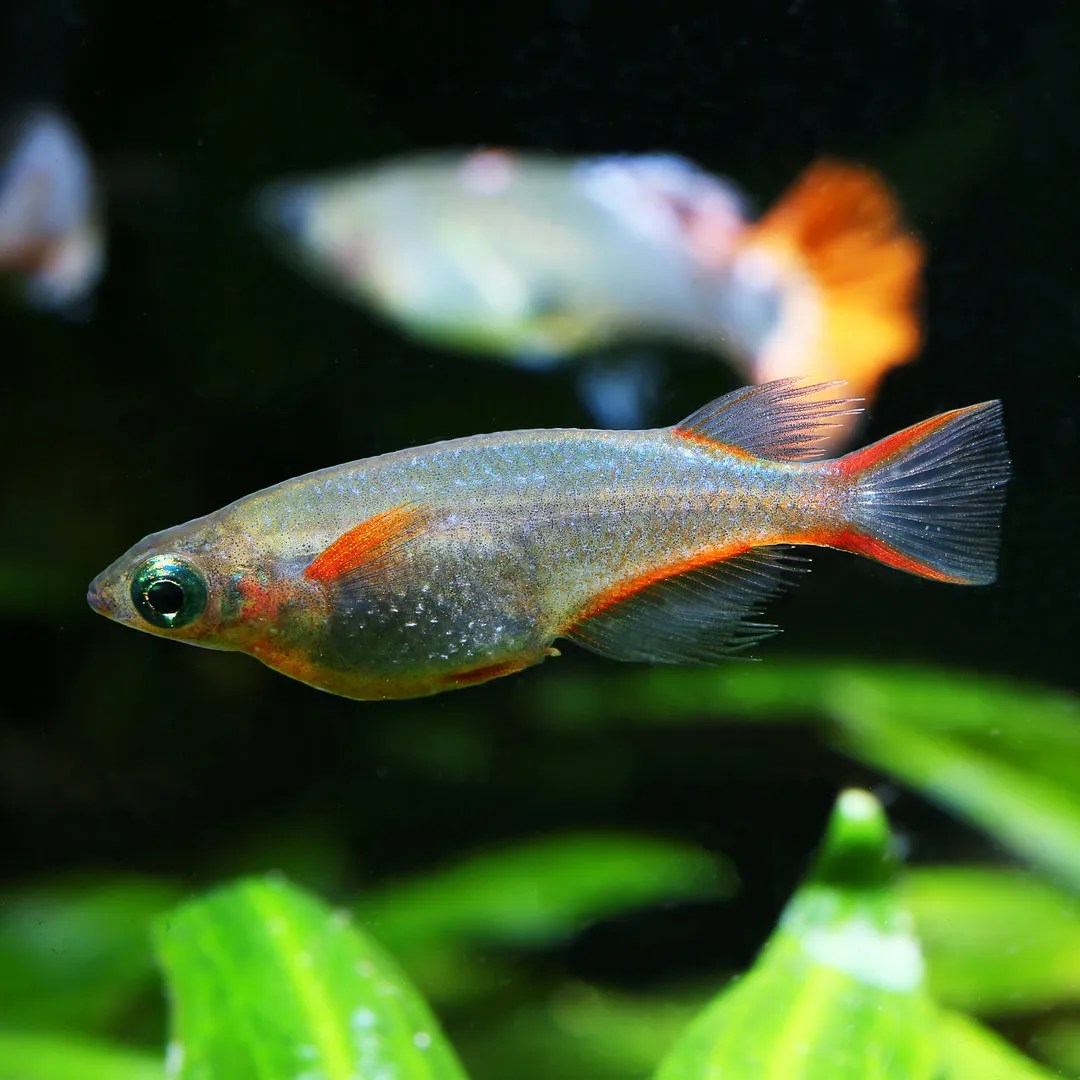
The Daisy’s Ricefish, scientifically known as Oryzias woworae, is a captivating freshwater fish native to the Muna Island, Southeast Sulawesi, Indonesia. Renowned for their vibrant blue coloration, these fish add a splash of color and excitement to any aquarium. Appearance Daisy’s Ricefish typically measure around 1-1.5 inches in length when fully grown. They possess a slender, torpedo-shaped body, gliding effortlessly through the water with an air of grace. Their most striking feature is their radiant blue coloration, which shimmers with an ethereal intensity under appropriate lighting. Their back and sides are covered in this luminous hue, while their belly is a contrasting silvery white. Large, dark eyes adorn their heads, adding to their overall charm. Behavior Daisy’s Ricefish are inherently peaceful and sociable fish, harmoniously coexisting with a variety of other peaceful aquarium inhabitants. They are schooling fish, thriving in groups of six or more, where they often swim in synchronized patterns, resembling a moving ballet of glowing sapphires. Their active and inquisitive nature makes them a joy to observe as they dart around the aquarium in search of food or explore their surroundings with an air of curiosity. Care and Maintenance Daisy’s Ricefish are relatively easy to care for, making them suitable for both experienced and novice aquarists. They prefer a well-planted aquarium with soft, acidic water. The ideal pH range for their habitat falls between 6.5 and 7.5, while water hardness should be maintained between 5 and 20 dGH. To ensure their comfort, the water temperature should be kept between 77 and 84 degrees Fahrenheit. Diet Daisy’s Ricefish are omnivores, delighting in a diverse diet that includes both plant-based and protein-rich sources. Flakes, pellets, live foods, and vegetables are all eagerly consumed by these radiant fish. A balanced diet ensures they receive the necessary nutrients for optimal growth and health. Tankmates Daisy’s Ricefish are gentle and peaceful, making them ideal companions for a variety of other peaceful fish. They thrive in the company of neon tetras, guppies, platies, and corydoras, forming harmonious communities that add a touch of diversity and color to the aquarium. Breeding While breeding Daisy’s Ricefish in captivity can be challenging, it is certainly achievable with careful planning and attention to detail. The male constructs a bubble nest, and the female deposits her eggs within its confines. The male diligently guards and fertilizes the eggs until they hatch, typically within 24-48 hours. The fry become free-swimming within a few days, requiring specialized care until they reach maturity. Tips for Keeping Daisy’s Ricefish Happy and Healthy Provide them with ample hiding places, such as caves, rocks, and dense vegetation, to alleviate stress and promote their natural behavior. Maintain a balanced diet that includes both plant-based and protein-rich sources to ensure their nutritional needs are met. Avoid overfeeding, as this can lead to water quality issues and potential health problems. Regularly monitor and maintain water parameters within the ideal range to provide a healthy aquatic environment. Test the water regularly and make adjustments as needed to maintain optimal water conditions. Exercise caution when introducing medications into the aquarium, as some medications can be harmful to fish. Troubleshooting If you encounter any difficulties with your Daisy’s Ricefish, here are some potential causes to investigate: Water Parameters: Check that the water parameters are within the acceptable range for Daisy’s Ricefish. Diet: Ensure that you are providing a balanced diet that includes both plant-based and protein-rich sources. Tankmates: Evaluate whether any larger or aggressive fish might be causing stress or harassment to your Daisy’s Ricefish. Fin Nipping: If fin nipping is observed, provide more hiding places and consider separating the Daisy’s Ricefish from fin-nipped fish. Diseases: If any signs of illness are detected, immediately isolate the affected fish and treat them with the appropriate medication. Conclusion Daisy’s Ricefish are captivating and peaceful additions to any freshwater aquarium. Their vibrant blue coloration, active behavior, and relatively easy care requirements make them a popular choice among aquarists of all levels. With proper care and attention, these glowing sapphires can bring years of joy and fascination to your aquarium.
Brand
Cooler Master
Related products
-
Mom Tiara Crown Rhinestone Pin Brooch Women’s Crystal JewelryAdd to basket
Quick View
-
Designer Rhinestone Crown Brooch Pin For Women Girls Ladies 4G9Add to basket
Quick View
-
Vintage Diamond Rhinestone Crown Pin Princess Tiara Beauty Pageant Brooch Women’s Jewelry, Crowns Brooches PinsRead more
Quick View
-
Vintage Rhinestone Gold Plate Crucifix Cross Religious Christian Crown Pin Brooch Jewelry, Crowns BroochesAdd to basket
Quick View